.png)
Categories
BothellPublished January 2, 2026
What to Expect When Living in Bothell, WA: Pros and Cons

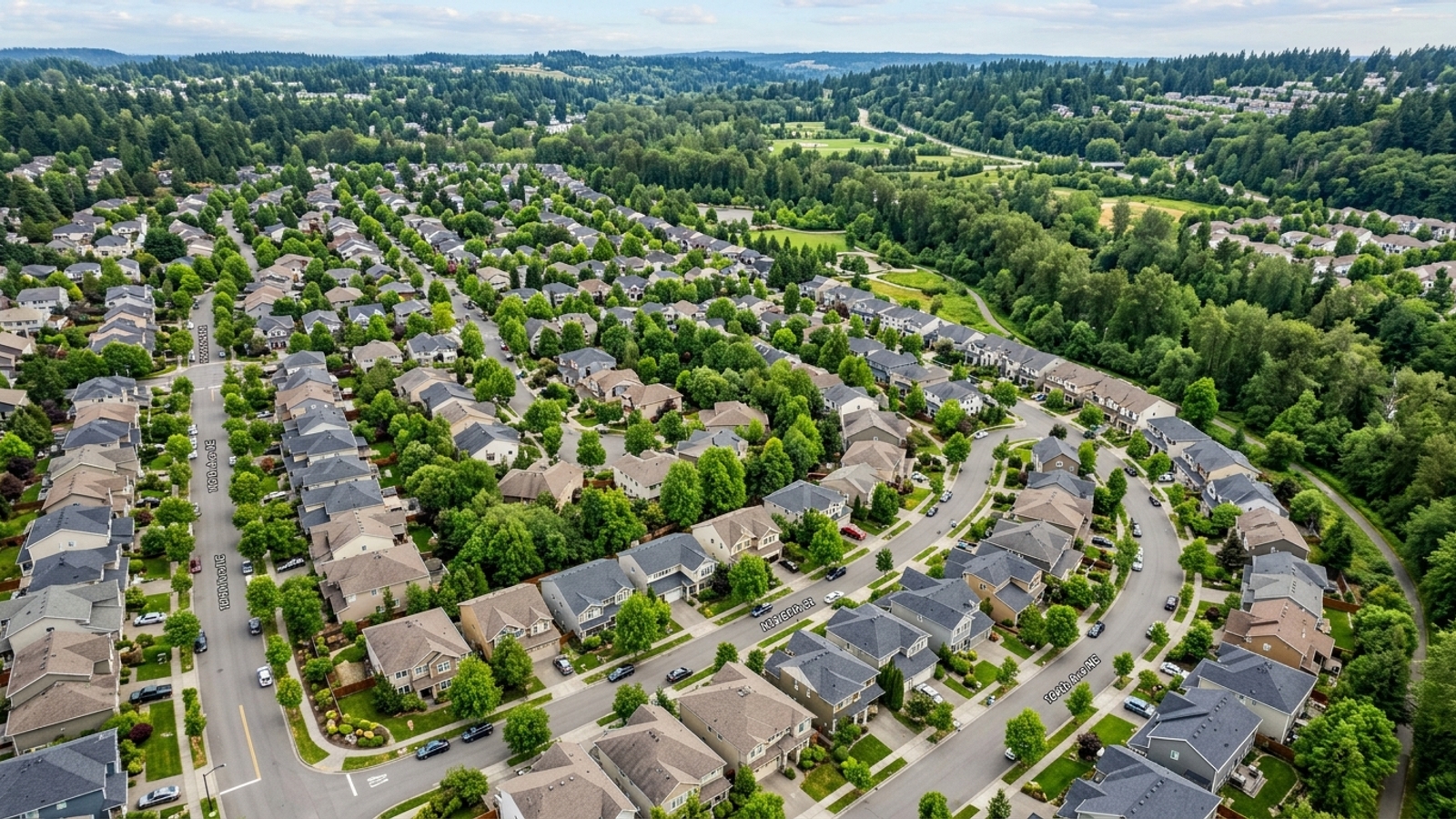
The median sale price when buying a home in Bothell, WA hit approximately $1.1 million in mid-2026. Homes are going pending in just 13 days, and there are only about 156 properties available at any given moment.
If you're trying to decide whether this city makes sense for you, you need more than a feel-good overview. This guide covers the real tradeoffs - crime statistics, commute times, housing costs, and the everyday stuff that actually affects your life here.
The Quick Verdict on Living in Bothell
A lot of buyers shopping the Seattle metro end up in Bothell because it puts you close to major employment centers without dropping you into the city itself. It's suburban in layout, it's connected by regional highways, and it has a functioning downtown. Those are real advantages.
But this is not a cheap or simple market. You're looking at concrete tradeoffs, and you should go in with clear eyes.
Pros at a Glance
The parks are extensive, the regional trail connections are solid, and the downtown holds up. You've got straightforward access to both Seattle and the Eastside tech hubs, and the housing stock mixes newer construction with established neighborhoods. The local economy has real stability behind it, backed by nearby commercial centers.
Cons at a Glance
Housing costs are the headline problem. The cost of living index sits at 228.6 - that's 128.6% above the national average - and housing itself comes in at an index of 324.8. Traffic on Interstate 405 and Route 522 is genuinely difficult during peak hours. Inventory hovers around 2.9 months of supply, and about a quarter of homes sell above list price. You'll need to be ready to move decisively and compete.
Factors to Weigh Before Moving
Your commute will shape your daily life here more than almost anything else. If you work in downtown Seattle or Bellevue, drive that route during rush hour before you commit - don't just look it up on a map. Property taxes and utility costs add up fast, and the financial baseline here runs well above what you'd carry in most other parts of Washington state.
Where Is Bothell and What County Is It In?
Bothell covers 13.64 square miles and sits northeast of Seattle. What makes it unusual is that the city limits cross into both King and Snohomish counties - and that detail matters more than most people realize before they start shopping.
Which county your address falls in determines your property taxes, your voting district, and which municipal services you receive. That's not a minor administrative quirk. Before you make an offer, confirm which county the specific property is in.
Bothell's Location and Seattle Access
Driving into downtown Seattle runs about 30 to 45 minutes depending on the time of day, and the Eastside tech corridors in Bellevue and Redmond are close. Commuters who want to avoid the highway can use regional bus routes or park-and-ride lots - that infrastructure exists and people use it.
Population and Density
The 2024 Census estimate puts Bothell's population at 51,770 residents, up from 48,161 in 2020. At roughly 3,530 people per square mile, you get dense commercial zones alongside lower-density residential subdivisions. It doesn't feel cramped, but it's not rural either.
Bothell Crime Statistics and Police Transparency
According to 2024 FBI Uniform Crime Reporting data, Bothell's total crime rate is 1,478.9 per 100,000 residents - about 30% below the national average. The violent crime rate is 110.0 per 100,000 residents. Property crime accounts for most of the activity at 1,368.9 per 100,000.
Those are the numbers. They give you a useful starting point, but they don't tell you what's happening on the specific block you're considering buying on.
Understanding the Local Crime Rate
Vehicle prowls and theft make up the bulk of property crime reports here. The full dataset is available through the FBI's National Incident-Based Reporting System, and the city publishes regular updates so residents can track how trends shift over time.
How to Research Specific Areas
The Bothell Police Department runs a public crime-transparency portal at bothellwa.gov/police-transparency. It updates daily with calls for service, case reports, arrests, and collision data, and it holds five years of historical records alongside current-year activity. You can search by specific blocks or intersections - use it on any address you're seriously considering. That's exactly what it's there for.
The Cost of Living in Bothell
The overall cost of living index in Bothell is 228.6, which puts it 128.6% above the national average. Housing drives that number, with an index of 324.8. Groceries, transportation, and healthcare all run higher than the national baseline too - so when you're building a budget, your mortgage payment is only part of the picture.
Home Prices and Rent
The median sale price as of mid-2026 is roughly $1.1 million. Homes average 13 days on market, and the average sale-to-list ratio is 100.7%. For additional context, Census Bureau data put the median property value at $925,100 in 2024, reflecting a 6.17% increase from the prior year. Renters aren't getting a break either - costs for apartments and single-family rentals are similarly elevated.
Salary Needed to Cover Expenses
A single adult needs an estimated $100,590 per year just to cover basic living expenses - housing, food, taxes, transportation. If you have dependents or a larger household, that number climbs proportionally. Run your actual income against that figure before you commit to relocating here.
Who Lives in Bothell: Population and Income Data
The U.S. Census Bureau's American Community Survey gives us a reasonably detailed picture. Bothell has roughly 37,930 adults, including 7,271 seniors. The median age is 38.6 years - 37.7 for males, 39.6 for females. It skews toward working-age residents, which makes sense given the commuter orientation of the city.
Median Household Income
The median household income reached $140,427 in 2024, up from $132,232 the year before, according to Census Bureau data. That income level is consistent with what it costs to live here - most residents are commuting to high-paying sectors in the surrounding metro.
Local Amenities and Civic Life
The city maintains public parks, community centers, and regional trails. The Sammamish River Trail runs directly through the area and connects to the Burke-Gilman Trail, which is one of the genuinely useful pieces of infrastructure in this part of the region. Downtown has retail, restaurants, and municipal buildings, and the city runs regular public events and farmers markets through the year.
Lifestyle, Climate, and Things to Do
Pacific Northwest weather is what it is: wet and mild from late autumn through early spring, dry and warm in summer. If you're coming from somewhere with distinct seasons, the gray stretch from October through March takes some adjustment. It's not dramatic - it's just persistent.
Beyond the rain, there are a few practical things to factor in. Properties near the Sammamish River or low-lying areas can see localized flooding, and the occasional winter storm is part of the deal. Earthquake preparedness isn't optional here - it's standard practice for homeowners throughout the region.
Natural Hazards and Preparedness
The city sits in a seismically active zone, which is reflected in local building codes and structural requirements. When you're evaluating a property, ask about its earthquake retrofitting history. For flood exposure, check the FEMA flood maps for the specific address - some properties require flood insurance, and you want to know that before you're under contract.
Tap Water and Utilities
The city's water supply meets standard municipal safety regulations, and you can review the annual utility reports for detailed breakdowns on sources and testing. Electricity and waste management are handled by regional providers. Budget for higher heating bills in December and January - utility costs shift with the seasons here in a way that's easy to underestimate if you've never lived in the Pacific Northwest.
Bothell vs. Nearby Alternatives
Buyers who are seriously considering Bothell usually also look at Seattle, Woodinville, and Kirkland. Each one involves different tradeoffs on price, lot size, and how long you'll spend in your car.
Bothell generally gets you more land than Seattle at a similar price point. That matters if you want a yard, a garage, and room to breathe. The catch is that you're trading Seattle's transit network and shorter downtown commutes to get it.
Comparing Bothell to Seattle
Bothell's housing stock is mostly single-family homes and townhouses. Seattle has a much higher concentration of condominiums and apartment buildings. Property taxes differ between the two cities, and Bothell's dual-county structure makes any direct comparison more complicated. If you're deciding between two specific properties, look at the exact millage rates rather than any general rule of thumb.
Tradeoffs in Commute and Housing
In Bothell, a car isn't optional for most people - it's how you get groceries, get to a doctor, and get to work. Bus routes exist, but driving is the default. Seattle's walkable neighborhoods and light rail access are real, but you pay for them in higher cost per square foot and limited parking. Neither is objectively better; it depends entirely on how you want to structure your daily life.
Housing Options for Senior and Assisted Living
Bothell has a meaningful range of housing formats for older adults and people who need ongoing care - from independent 55+ communities to full-time medical facilities. With 7,271 seniors in the city, the local infrastructure is set up to support different levels of need. Single-story homes and ADA-compliant condos are available throughout the area.
Senior and Assisted Care
Assisted living facilities here offer memory care, nursing staff, and daily living support, with monthly fees that typically cover room, board, and medical assistance. Independent senior communities focus on low-maintenance living with shared amenities, and HOA dues in those properties usually cover landscaping and exterior maintenance.
Sober Living Communities
Bothell also has sober living homes for people transitioning out of rehabilitation. These operate under specific house rules and provide structured, substance-free environments. Availability shifts, so if this is relevant to your situation, contact facility directors directly to get current vacancy and admission information.
Amenities by Life Stage in Bothell
The city's infrastructure covers a reasonable range of daily needs across different life stages - schools, outdoor recreation, medical access, and a functioning commercial core. Downtown Bothell is the primary hub for retail and services. The surrounding subdivisions offer quieter streets with parks close by.
Parks and Educational Facilities
Public parks here have sports fields, playgrounds, and picnic shelters, and the trail system works year-round for cyclists, runners, and walkers. Public school boundaries follow regional district lines, and whether you're in King or Snohomish County affects which schools serve your address. The respective district websites have zoning maps - use them for any specific property you're evaluating.
Healthcare and Downtown Access
Bothell has urgent care clinics and primary care offices. For specialized care, major hospitals in Bellevue, Kirkland, and Seattle are accessible. Downtown has breweries, cafes, and local retail, and the city recently updated the Main Street area to improve pedestrian access and outdoor dining. It's a functional, low-key downtown - not a destination, but genuinely usable.
Frequently Asked Questions
Is the cost of living in Bothell, WA lower than in Seattle or Bellevue?
It depends on the specific neighborhood, but Bothell is generally comparable to many parts of Seattle and slightly less expensive than Bellevue. That said, the cost of living is still 128.6% above the national average, and the median home price sits around $1.1 million - so "less expensive than Bellevue" is relative.
How bad is the daily traffic and commute from Bothell to Eastside tech hubs?
I-405 can cause real delays during morning and evening rush hours. Commuting to Bellevue or Redmond typically takes 30 to 45 minutes depending on when you leave. Drive it yourself before you decide.
What are the biggest downsides or hidden cons of buying a home in Bothell?
High housing costs and car dependency are the two that catch people off guard most often. The dual-county layout is the third - property taxes and municipal services vary depending on your exact address, and that's not something you want to discover after closing.
Does Bothell have a walkable downtown area with restaurants and nightlife?
Yes. Bothell's Main Street corridor has restaurants, cafes, and local shops, and the city has put money into pedestrian infrastructure to make the area more accessible. It's a real downtown, not just a strip mall with a sign.
What are the top-rated school districts for families moving to Bothell, WA?
Bothell is served by local public school districts, and your boundaries depend on whether your address falls in the King or Snohomish County portion of the city. Check the official district zoning maps for any specific property - there's no shortcut on this one.
How does living in Bothell compare to neighboring cities like Woodinville or Kirkland?
Bothell typically has more inventory and slightly lower median prices than Kirkland, which sits closer to Bellevue. Woodinville has larger lot sizes and a more rural feel compared to Bothell's suburban layout.

Mindy Newton
| Greater Sound Team Real Estate | Real Broker LLC
or another way