.png)
Categories
BothellPublished February 6, 2026
The History of Bothell: Tracing the City's Roots for 2026 Homebuyers

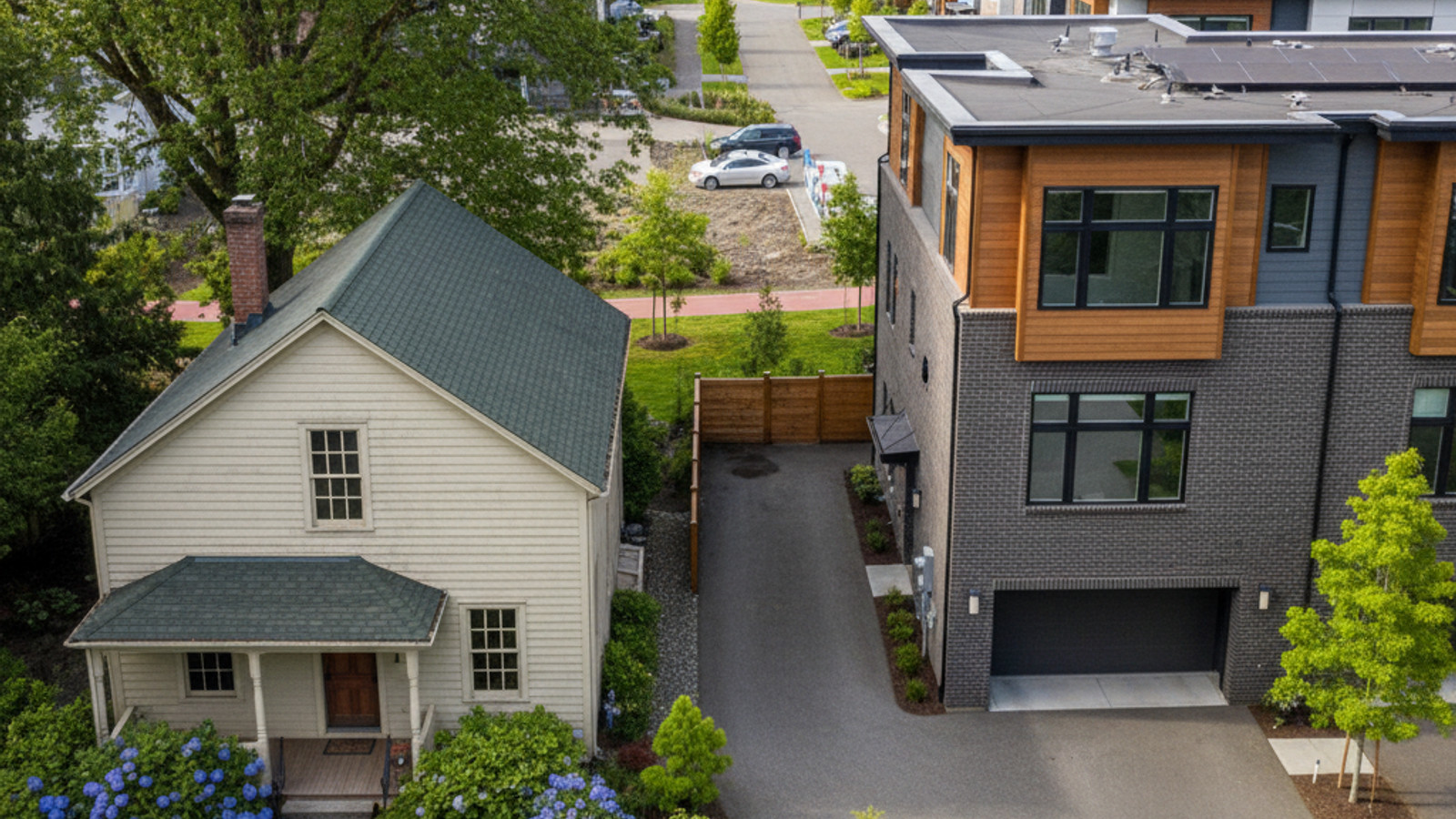
Understanding the history of Bothell is essential for anyone looking to invest in the local real estate market today. What started as an isolated logging settlement along the Sammamish River has transformed into one of the most dynamic suburban centers in Washington state. Buyers exploring the area in 2026 often notice a unique blend of preserved pioneer architecture sitting right next to cutting-edge life sciences facilities.
This distinctive character did not happen by accident. The city's evolution from a river-dependent timber town to a modern biotech powerhouse directly shapes current property values and neighborhood layouts. Knowing how the local infrastructure and economy developed gives you a massive advantage when evaluating different property types across the region.
Because the city straddles the line between King County and Snohomish County, its historical growth patterns created highly localized market pockets. Early settlement decisions dictated where the commercial centers and residential zones would eventually mature. Recognizing these historical dividing lines helps modern buyers understand why certain blocks command massive premiums over others just a mile away.
The Founding and Early Days of Bothell
Long before the first sawmills arrived, the land surrounding the Sammamish River was home to the Sammamish people. These indigenous groups relied heavily on the waterway, which they called Squak Slough, for transportation and sustenance. The dense forests and accessible river eventually caught the attention of pioneers looking to capitalize on the region's vast natural resources.
The formal history of Bothell as a municipality began when George Brackett purchased 80 acres of heavily timbered land in 1885. Brackett quickly established a large-scale logging operation and filed the first official plat for the town in 1888. During this era, the local economy revolved entirely around extracting old-growth timber and processing it through numerous shingle mills.
Because overland road access was virtually nonexistent in the late 19th century, early residents depended entirely on the river. Flat-bottomed steamboats navigated the winding, shallow waters of Squak Slough to transport massive loads of lumber directly to Seattle. This reliance on the river dictated that all early commercial buildings and homes were constructed as close to the water as possible.
The transportation landscape shifted dramatically with the arrival of the Seattle, Lake Shore and Eastern Railway. Trains provided a much faster and more reliable method for moving both timber and passengers across the Pacific Northwest. This newfound connectivity fueled rapid population growth, culminating in the city's official incorporation in 1909 under its first mayor, Gerhard Ericksen.
Geographic Shifts and Infrastructure Milestones
The physical landscape of the city changed permanently in the early 20th century due to major regional engineering projects. When the United States Army Corps of Engineers completed the Lake Washington Ship Canal, it fundamentally altered the entire local watershed. The project lowered the water levels of Lake Washington by nearly nine feet, which subsequently drained the connecting Sammamish River.
This significant drop in water depth effectively ended the era of commercial steamboat navigation in the area. The lower water levels also exposed acres of new, fertile floodplain along the riverbanks. As river traffic died out, the city was forced to pivot toward modern overland transportation networks to maintain its economic viability.
The construction of Washington State Route 522 and the eventual completion of Interstate 405 transformed the once-isolated town into a highly connected suburb. These major highways replaced the old rail lines and established the strategic commuter routes that still drive local real estate demand today. Properties with quick access to these specific corridors consistently see the lowest days on market.
Interestingly, the obsolescence of the early rail lines created one of the most beloved local amenities for modern residents. The abandoned railway corridors were eventually preserved and converted into the paved Sammamish River Trail and the Burke-Gilman Trail.
Today, homes located within a short distance of these extensive trail systems command absolute premium prices on the open market.
From Agriculture to a Modern Biotech Hub
Once the old-growth timber was fully depleted, the local economy transitioned heavily into agriculture and dairy farming. Expansive farms dominated the newly exposed floodplains through the first half of the 20th century. These local farms supplied massive quantities of food and dairy to the rapidly growing Seattle metropolitan area.
This agricultural foundation kept the community relatively small and rural until the end of World War II. The post-war era triggered a massive housing boom that rapidly converted those sprawling dairy farms into suburban residential developments. As the population surged, the local economy began to diversify away from agriculture and toward professional services.
The late 20th century brought another monumental shift with the establishment of the Canyon Park business district. Soon after, the city secured the joint campus for the University of Washington Bothell and Cascadia College, which opened new doors for technology and research. This influx of higher education and corporate investment fundamentally changed the demographic and economic trajectory of the entire region.
By 2026, the area has firmly established itself as a premier Pacific Northwest life sciences hub. Major facilities operated by pharmaceutical giants like Pfizer and Bristol Myers Squibb anchor the local employment market. This heavy concentration of high-paying biotech jobs creates consistent, strong demand for local housing across all price points.
Historic Downtown Revitalization and Modern Real Estate
The connection between past and present is most visible in the ambitious revitalization of downtown Bothell and the Main Street corridor. City planners have successfully preserved the area's historic charm while heavily encouraging dense, transit-oriented development. The ongoing 2026 Downtown Subarea Plan Update continues to shape this balance, guiding massive new construction projects while rigorously protecting pioneer heritage sites.
Adaptive reuse of historical properties has become a major hallmark of the downtown business district. The most prominent example is the McMenamins Anderson School, where developers transformed a classic 1930s junior high school into a sprawling entertainment and hospitality complex. This project proved that historic preservation could drive massive commercial success and increase surrounding property values.
Civic amenities like the Bothell Historical Museum and the Park at Bothell Landing further anchor the community to its pioneer roots. These public spaces provide a visual history lesson right in the middle of a bustling modern commercial zone. Buyers are often drawn to the area specifically because it retains this authentic historical identity rather than feeling like a generic suburb.
For real estate investors and homebuyers, this revitalization creates a deeply varied property landscape within a very small footprint. You will find beautifully preserved early 20th-century heritage homes sitting just blocks away from brand-new, modern townhome developments. This unique mix of historic single-family properties and high-density new construction offers housing options for a wide range of budgets.
Frequently Asked Questions About Bothell's History
What is Bothell, WA known for today?
Today, the city is widely recognized as a major biotech and life sciences hub in the Pacific Northwest. It successfully blends this modern economic engine with a revitalized, historic downtown core that draws visitors from across the region. The presence of the University of Washington Bothell campus also provides a distinct, energetic college-town atmosphere.
What are some historical landmarks in Bothell?
The Park at Bothell Landing serves as a central hub for local history, featuring several relocated and preserved pioneer buildings. Visitors can explore the Bothell Historical Museum, which is housed in the historic 1884 William A. Hannan House. The revitalized McMenamins Anderson School is another major landmark that creatively repurposed a classic 1930s educational building.
What were the major industries in Bothell's past?
The earliest local economy was entirely dependent on logging and shingle mills operating along the Sammamish River. Once the timber was cleared, the region transitioned into extensive agriculture and dairy farming to support nearby cities. It was not until the late 20th century that technology, education, and life sciences became the dominant economic drivers.
Is Bothell considered a wealthy area?
The local real estate market reflects a strong economic baseline driven heavily by the surrounding life sciences and technology sectors. In 2026, median home values routinely exceed $900,000, placing it among the more premium suburban markets in the region. However, the expanding inventory of modern townhomes does provide excellent entry points for buyers looking below the million-dollar mark.

Mindy Newton
| Greater Sound Team Real Estate | Real Broker LLC
or another way